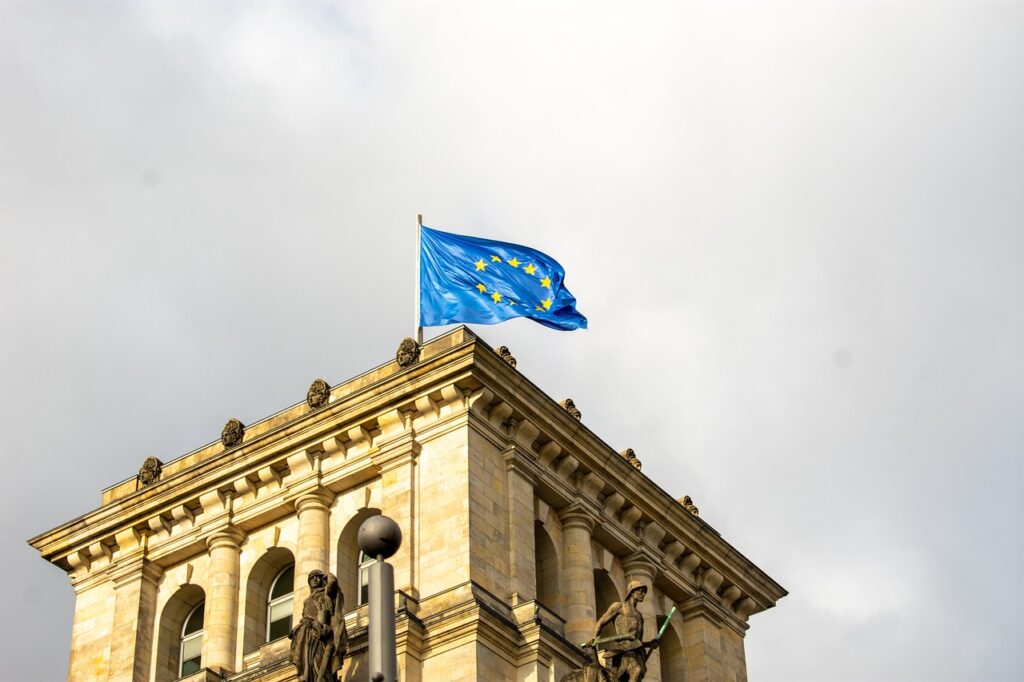
Horizon Europe is the European Union’s main funding program for research and innovation, and African organizations typically access it not as lead applicants but as partners inside a consortium led by an EU-based institution, usually through international cooperation actions designed to include non-EU partners. Getting in usually means being a strong, credible partner an EU-based lead wants on their team, not applying alone.
This is part one of a three-part series on EU funding relevant to African nonprofits and startups. This piece covers Horizon Europe. The other two cover LIFE and Interreg and Erasmus+ and the European Social Fund.
What Horizon Europe actually is
Horizon Europe is the EU’s framework program for research and innovation, running in multi-year cycles and funding everything from fundamental scientific research to applied innovation tackling specific societal challenges. It’s structured around pillars covering excellent science, global challenges and industrial competitiveness (health, climate, digital transformation, food security), and innovative Europe (breakthrough innovation and scale-up, more relevant to startups than nonprofits).
Because it’s a research and innovation program first, money flows toward projects with a genuine research, innovation, or evidence-generation component, not general programmatic or humanitarian funding. A well-run community health program isn’t automatically Horizon Europe material; a project testing or evaluating a health intervention model in partnership with a research institution plausibly is.
Specific calls, budgets, and deadlines change with each multi-year cycle. Check the official EU funding portal before you invest time; treat this as the durable strategic layer, not a substitute for current details.
How African organizations typically participate
- Consortium partner. An EU-based university or company leads the application and brings in African partners for field implementation, local research access, or a demonstration site.
- Associate or third-country partner. Funding rules for non-EU partners vary by call and cycle, so verify for your specific target.
- International cooperation actions. Calls designed to fund EU-Africa collaboration on shared global challenges — usually the most realistic entry point.
What almost never happens: an African nonprofit applying solo, without any EU-based lead, and receiving funding directly. The program is structured around consortia.
What makes an organization consortium-ready
- A concrete research or innovation angle to your work, not just good programmatic delivery.
- Existing relationships with research institutions, ideally including some in Europe already.
- A track record of rigorous data collection and evaluation.
- Financial and administrative capacity to handle EU grant management, including reporting and co-financing.
- Clarity about what you specifically bring — field access, contextual knowledge, community trust.
- A stable legal entity status, properly registered with clean financials.
A realistic step-by-step path to positioning yourself
- Build a specific research or innovation narrative around your existing work.
- Identify the thematic cluster your work fits, rather than stretching across all of them.
- Find European research institutions already active in your theme and geography.
- Attend or seek visibility at relevant conferences and partner-search platforms.
- Get your documentation and financial systems EU-grant-ready before you’re approached.
- Start with smaller international cooperation or preparatory networking grants rather than a flagship consortium first.
Building the relationships and credibility to be a genuine consortium partner is usually a multi-year effort — worth starting now in parallel with more immediate funding sources.
Common misconceptions worth clearing up
“Horizon Europe is for universities, not nonprofits.” Nonprofits regularly participate as partners, particularly where field access or community trust is part of what the project needs.
“If we’re not funded, at least we’ll get visibility.” Treat funding as the actual goal — most submitted proposals in any call are not funded.
“Once we’re in one consortium, funding will keep flowing.” Each project is its own grant agreement with a defined funding period; treat each success as a foundation for the next opportunity.
“We should try to lead our own consortium eventually.” Possibly, once you have deep EU relationships and a strong track record — a multi-year aspiration, not an early-stage goal.
FAQ
Can African nonprofits apply directly for Horizon Europe funding? Rarely as a solo lead applicant — typically as partners alongside an EU-based lead, most often through international cooperation actions.
What kind of projects does Horizon Europe actually fund? Research and innovation projects on fundamental science, global challenges, and innovation scale-up — not general programmatic or humanitarian funding.
How do African nonprofits find EU consortium partners? Through existing relationships with European universities, partner-search platforms, conferences, and direct outreach to organizations running Africa-focused research programs.
Do Horizon Europe rules change between funding cycles? Yes — always check the official EU funding portal for current details.
If EU research funding feels like a long game worth starting now, that instinct is right, and it’s one of the areas where working with an Africa-based consultant who understands both sides of the partnership can meaningfully shorten the runway.